Citi is the issuer people misunderstand most. Chase's 5/24 rule is famous because it is brutal and simple: cross the line, get auto-declined. Citi's rules are quieter. They rarely stop you from being approved. They stop you from getting paid.
That distinction matters more than anything else in this article. Citi will happily approve a card and then decline to pay the welcome bonus, and you will not find out until the bonus fails to post two months later. Understanding the rules is the difference between a 75,000-point application and a free hard inquiry.
Here are all three rules as of August 2026, what each one actually counts, and how to sequence a Citi strategy around them.
The Three Rules at a Glance
| Rule | What it limits | Consequence of breaking it |
|---|---|---|
| 1/8 | 1 Citi card approval per 8 days | Application denied or held for review |
| 2/65 | 2 Citi card approvals per 65 days | Application denied |
| 48-month | 1 welcome bonus per card per 48 months | Approved, but no bonus |
The first two are velocity rules. They govern approvals. The third is a bonus rule. It governs whether the application was worth making.
Rule 1: The 1/8 Rule
Citi will not approve more than one credit card application in any rolling 8-day window.
- What counts: Any Citi-branded credit card approval, personal or business, including co-brands like AAdvantage and Costco
- What it measures: Days between approvals, not days between applications
- What happens if you break it: The second application goes to pending, and is usually denied on review
The 8-day count is calendar days, and the community consensus is that it is measured from approval date to approval date. If you are approved for a Citi card on the 1st, your next Citi application should not go in until the 9th at the earliest. Most people wait 10 days to leave margin.
A denied application does not start the clock. Only an approval does. If your first application is denied, you are free to apply again immediately, though doing so is usually a bad idea for other reasons.
Rule 2: The 2/65 Rule
Citi will not approve more than two credit card applications in any rolling 65-day window.
This is the rule that actually constrains a Citi strategy. The 1/8 rule only forces you to space applications by a week. The 2/65 rule caps you at roughly two Citi cards per quarter, or about eight per year at maximum theoretical pace.
- What counts: Citi-branded credit card approvals, personal and business
- What does not count: Citi retail partner cards issued by other banks, and Citi bank account openings
- How it stacks with 1/8: Both apply simultaneously. Two approvals 8 days apart satisfies 1/8 but starts a 65-day clock before a third.
You will sometimes see this written as "8/65" or "1/8/65." Those are the same rule set described together, not a third separate rule. The clean way to hold it in your head is: 8 days between any two, 65 days before a third.
Sample Citi sequence
A maximum-pace Citi year, starting from zero:
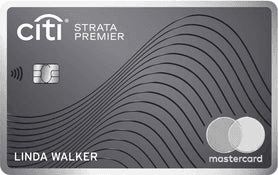
- Day 0: Citi Strata Premier approved
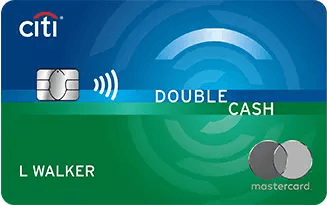
- Day 10: Citi Double Cash approved (satisfies 1/8)
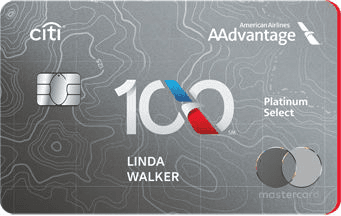
- Day 75: AAdvantage Platinum Select approved (satisfies 2/65 from day 0)
- Day 85: CitiBusiness AAdvantage approved
- Day 150: Fourth personal card
In practice, almost nobody should run at this pace. Citi is one of the more inquiry-sensitive issuers, and stacking four approvals in five months will suppress your credit limits and raise your odds of a manual review on the next one.
Rule 3: The 48-Month Bonus Rule
This is the important one, and the one that gets misreported constantly.
You are not eligible for a welcome bonus on a Citi card if you have received a welcome bonus on that same card in the past 48 months. The clock runs from the date the bonus posted, not the date you opened or closed the account.Some Citi offers use a different construction, and the terms will say so explicitly: "if you have had this card open in the past 48 months, or received a bonus on it in the past 48 months." Read the offer terms on the actual application page. They are the only authoritative source.
The part everyone gets wrong: it is per card, not per family
Chase and Amex both use family rules. Getting the Sapphire Preferred bonus locks you out of the Sapphire Reserve bonus. Getting the Amex Gold bonus can affect Platinum eligibility.
Citi generally does not work this way. The 48-month clock attaches to the individual product. That means:
- You can hold the Strata Premier and still get a Double Cash bonus
- You can get the AAdvantage Platinum Select bonus and the AAdvantage MileUp bonus without waiting 48 months between them
- You can get a personal AAdvantage bonus and a CitiBusiness AAdvantage bonus in the same year
There have been periods where Citi applied stricter family logic to the ThankYou lineup, and the terms language has shifted over the years. The current 2026 behavior is per-product. Always verify against the offer terms rather than against a blog post, including this one.
Checking your own 48-month status
Citi does not give you a tool for this. You have to track it yourself:
- Pull your credit reports from annualcreditreport.com and list every Citi account with its open date
- Add closed Citi accounts, which stay on your report for up to 10 years
- For each, estimate the bonus post date (usually 1 to 2 statement cycles after account opening)
- Anything with a bonus that posted inside 48 months is ineligible
If you are close to the line, wait. A bonus denied for a 48-month violation is not recoverable through the reconsideration line.
How Citi Treats Inquiries
Separate from the written rules, Citi is meaningfully inquiry-sensitive. Community data points consistently show approval odds falling off with six or more inquiries in the past six months, regardless of score.
Citi pulls a single bureau in most states, and which one varies by region. Equifax is the most common, with Experian in some markets. This matters if you keep your reports frozen, which you should. See our guide to credit freezes and applications for the per-issuer thaw list.
What Citi Does Not Have
Worth stating clearly, because these myths circulate:
- No 5/24 equivalent. Citi does not care how many cards you have opened at other issuers. Being at 8/24 does not auto-decline you at Citi.
- No hard cap on total Citi cards. There is no "maximum 5 cards" rule. Citi limits total credit extended, not card count. If you are denied for having too much credit with them, you can often reallocate a limit from an existing card and get approved on reconsideration.
- No 24-month rule. The old 24-month bonus language was replaced by the 48-month rule years ago. Anyone citing 24 months is working from stale information.
Citi Lineup Notes for 2026
A few products have changed in ways that affect planning:
- Custom Cash is closed to new applications as of May 2026. If you already hold one, it keeps working. If you were planning a multiple Custom Cash strategy, that door is shut for new applicants.
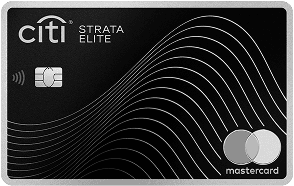
- Strata Elite is Citi's premium entry and carries its own 48-month clock, independent of Strata Premier.
- Costco Anywhere Visa behaves as its own product for bonus purposes and is not part of the ThankYou ecosystem.
Reconsideration at Citi
Citi's reconsideration line is one of the more productive ones. If you are denied for a reason that is not a hard rule violation, calling is worth it.
What works:
- Too much credit extended: Offer to move a limit from an existing Citi card to the new one. This is the single most effective Citi recon script.
- Too many recent inquiries: Explain what the inquiries were for. Rate shopping and a mortgage are sympathetic. Six card applications are not.
- Unable to verify information: Usually an address or income mismatch. Easy fix on the phone.
What does not work: asking for a 1/8 or 2/65 override, or asking for a bonus you are not eligible for under the 48-month rule. Those are coded into the system.
See our reconsideration guide for full scripts.
FAQ
Does the 1/8 rule count applications or approvals?
Approvals. A denial does not start the 8-day clock. That said, applying repeatedly after denials is a fast way to get flagged for review.
Do Citi business cards count toward 1/8 and 2/65?
Yes. Personal and business Citi approvals share the same velocity buckets.
Do Citi cards count toward Chase 5/24?
Citi personal cards do, because they report to your personal credit report. CitiBusiness cards do not report to personal credit, so they do not add to your 5/24 count. See business cards that don't report to personal credit.
If I close a Citi card, does the 48-month clock reset?
No. Closing changes nothing. The clock runs from when the bonus posted.
Can I get approved but not get the bonus?
Yes, and this is the most common Citi mistake. Citi will approve the account and simply not pay the bonus. There is no warning during the application.
How do I know if an offer uses the 48-month rule?
Read the offer terms on the application page before submitting. The exact language varies by product and by offer, and it is the only place the current rule is stated authoritatively.
Does a product change reset the 48-month clock?
A product change does not earn a bonus, so it does not start a clock. But product changing into a card can make you ineligible for that card's bonus later, depending on the offer's terms language. See our product change guide.
Does Citi do a hard pull for a credit limit increase?
Requested increases are typically a hard pull at Citi. Automatic increases are not. See credit limit increases.
How many Citi cards can I hold at once?
There is no published cap. People hold five or more. The binding constraint is total credit extended relative to your income, not the number of accounts.
Is Citi's 2/65 rule strictly enforced?
More consistently than most soft rules. Unlike Barclays' velocity guidance, which is fuzzy, 2/65 behaves like a coded rule. Plan around it rather than testing it.
The Bottom Line
Citi's rules are less punishing than Chase's, but they punish differently. Chase tells you no. Citi says yes and then quietly withholds the reward.
Three things to do:
- Space Citi applications 8 days apart, and cap yourself at two per 65 days. These are the approval gates, and they are real.
- Track your own 48-month bonus history per card. Citi will not check it for you before taking your inquiry.
- Read the offer terms on the application page every single time. The 48-month language varies by product and shifts over time. It is the one source that is never stale.
Get those three right and Citi is one of the friendlier issuers to build around, with no 5/24-style lockout and a reconsideration line that actually helps.