Wells Fargo is the major issuer with the least reliable public information. Search for their application rules and you will find two articles stating flatly that they enforce a 6/24 rule, and two stating flatly that they do not. Both cite data points. Neither is lying.
That contradiction is the actual story, and it is worth understanding rather than papering over. Wells Fargo runs a risk model rather than a coded rule set, and a risk model produces inconsistent outcomes on identical inputs. Here is what is confirmed, what is contested, and how to plan when the rules themselves are uncertain.
What Is Confirmed
| Rule | Status | Effect |
|---|---|---|
| 1 card per 6 months | Stated by Wells Fargo | Usually denied, inconsistently enforced |
| 48-month bonus rule | In offer terms | Approved, but no bonus |
| Personal and business separate | Confirmed by data points | One of each possible in a 6-month window |
| 6/24 rule | Contested | See below |
Rule 1: One Card Per Six Months
Wells Fargo's own language says they may decline an application if you have opened a Wells Fargo credit card within the previous six months. This is the closest thing they have to a published rule.
Two things make it less absolute than it sounds:
- It is enforced inconsistently. Approvals inside the six-month window happen, particularly for people with an existing Wells Fargo banking relationship.
- Personal and business cards are separate. You can be approved for a personal card and a Signify Business Cash in the same six-month window, and this is well documented.
Plan on six months. Be unsurprised if someone else got through at four.
Rule 2: The 6/24 Question
Here is the contested one, stated honestly.
The claim: Wells Fargo auto-declines applicants with six or more new personal credit cards opened across all issuers in the past 24 months, functioning like a looser version of Chase 5/24. The evidence for: A meaningful cluster of denials from applicants above that threshold with otherwise strong profiles, and denial letters citing "too many accounts recently opened." The evidence against: A meaningful cluster of approvals from applicants well above that threshold, including people at 9/24 and 10/24. The most likely explanation: Wells Fargo weights recent account velocity heavily as a risk input rather than enforcing a coded cutoff. Six new accounts in 24 months hurts. It does not disqualify. Other factors, especially an existing deposit relationship, can outweigh it.What this means practically: do not skip a Wells Fargo application because you are at 7/24. Do lower your expectations, and do not burn the inquiry if the offer is marginal.
This is genuinely different from Chase, where being over 5/24 makes the application pointless. At Wells Fargo, being over the line makes it a coin flip.
Rule 3: The 48-Month Bonus Clock
Wells Fargo restricts welcome bonuses on a 48-month lookback for most products. If you received a bonus on a card within the past 48 months, you will not receive it again.
Exceptions exist and they matter:
- Choice Privileges co-brands have historically used a shorter window, around 15 months
- Terms vary by product and by offer, and the application page is the authoritative source
As with Citi, Wells Fargo will approve the account and simply not pay the bonus. There is no warning during the application and no reconsideration path afterward.
Inquiry and Velocity Sensitivity
Beyond the written rules, Wells Fargo weights the last 6 to 12 months of your credit activity heavily. Clusters of inquiries hurt more here than at Amex or Capital One.
A pattern worth internalizing: at Wells Fargo, recent activity can override the written rules in both directions. A clean 12 months can get you approved inside the 6-month window. A messy 6 months can get you denied at 3/24.
The Deposit Relationship
Like U.S. Bank, Wells Fargo treats existing customers differently. A checking account materially improves outcomes, and it is the most commonly cited factor in approvals that "should not" have happened under the 1/6 rule.
If Wells Fargo cards are part of a longer plan, open a checking account well ahead of applying.
The 2026 Lineup
Wells Fargo has narrowed its lineup, and a couple of changes affect planning:
- Attune was discontinued in June 2026
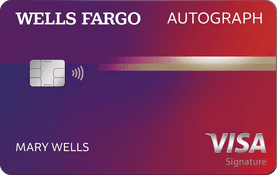
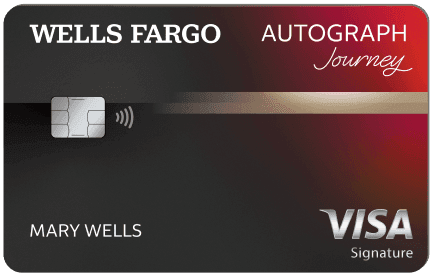
- Autograph and Autograph Journey are now the core rewards products, and Autograph Journey is the one with transferable points
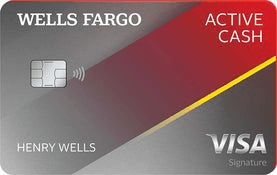
- Active Cash remains one of the strongest flat-rate 2% cards with no annual fee
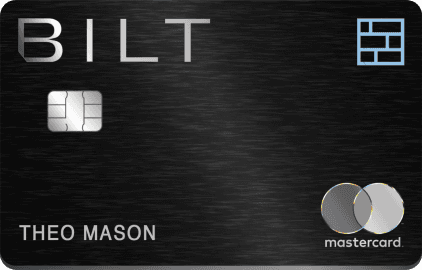
- The Bilt Mastercard is issued by Wells Fargo, which means it counts toward Wells Fargo's internal velocity considerations even though most people think of it as a Bilt product
That last point catches people. If you opened a Bilt Mastercard four months ago, you are inside Wells Fargo's 1/6 window.
Business Cards
Wells Fargo business cards do not report to your personal credit report in good standing, so they do not add to your 5/24 count. They also run on a separate velocity track from personal cards.
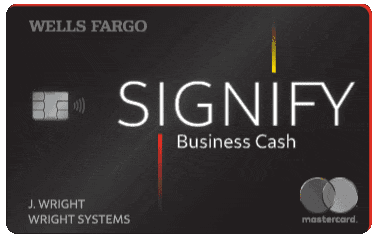
Signify Business Cash is the main product, and it is a reasonable flat-rate business card for people who want to stay under 5/24 while still opening accounts.
Which Bureau
Wells Fargo pulls Experian most often, with TransUnion and Equifax appearing regionally. Multiple-bureau pulls are more common here than at most issuers, so if your reports are frozen, plan to thaw more than one. See credit freezes and applications.
How to Sequence Wells Fargo
- Open a Wells Fargo checking account and let it season if you are planning multiple cards
- Space personal applications six months apart, and treat exceptions as luck rather than strategy
- Run one personal and one business card in the same window if you want to move faster
- Check the 48-month clock against your own bonus history before applying
- Skip the application if you are above 6/24 and the offer is only average, since the odds are genuinely uncertain and the inquiry is not free
FAQ
Does Wells Fargo have a 5/24 or 6/24 rule?
Not as a coded auto-decline. Recent account velocity is a heavily weighted risk input, and applicants above roughly 6/24 are denied more often. Approvals well above that threshold are documented.
Can I get two Wells Fargo cards in six months?
One personal and one business, commonly. Two personal cards, occasionally, usually with an existing banking relationship.
Does the Bilt Mastercard count as a Wells Fargo card?
Yes. It is issued by Wells Fargo and factors into their internal velocity view.
How long until I can get a bonus again?
48 months on most products, measured from when the prior bonus posted. Some co-brands use shorter windows. Read the offer terms.
Do Wells Fargo cards count toward Chase 5/24?
Personal cards do. Business cards do not.
Will a denial letter tell me the real reason?
Partially. "Too many accounts recently opened" is the most common Wells Fargo denial reason and it is usually accurate. It does not tell you which threshold you crossed, because there may not be a fixed one.
Is reconsideration worth it at Wells Fargo?
Less productive than at Citi or Chase. Wells Fargo's recon line has limited authority to override risk-model denials. It is worth one call for a verification or income issue, not for a velocity denial.
Does Wells Fargo do soft-pull credit limit increases?
Automatic increases are soft. Requested increases are typically hard pulls. See credit limit increases.
Can I product change a Wells Fargo card?
Yes, generally after 12 months, within their lineup. See our product change guide.
Why is information about Wells Fargo's rules so inconsistent?
Because Wells Fargo runs a risk model rather than a rule set. Sites that report a hard 6/24 rule are describing a pattern as if it were a policy.
The Bottom Line
Wells Fargo is the issuer where confident advice is usually wrong.
- Treat 1/6 as real and 6/24 as a probability shift, not a wall. The first is stated policy. The second is a risk weighting that other factors can outweigh.
- Bank with them. An existing deposit relationship is the most consistent explanation for approvals that break the pattern.
- Check the 48-month bonus clock before you apply. It is the rule most likely to cost you real money, because Wells Fargo approves the card either way.
The products are worth the trouble. Active Cash is a top-tier no-annual-fee 2% card, and Autograph Journey is a genuinely competitive transferable-points option. You just have to accept more uncertainty at the application step than any other major issuer requires.