Business credit cards are the most underused tool in personal credit optimization. The reason: at most major issuers, business cards do not appear on your personal credit report. They don't count toward Chase 5/24, they don't show up in your account list when other lenders pull your credit, and their utilization doesn't drag your personal score.
This makes them the single most effective workaround for issuer velocity rules. You can be at 4/24 with Chase, open three Chase Ink business cards, and still be at 4/24 — the business cards don't count.
Here's exactly which business cards stay off personal credit, how to qualify as a "business" without being one in any traditional sense, and how to use the strategy responsibly.
Business Cards: What "Reports to Personal Credit" Actually Means
Two separate things can happen when you open a business card:
1. The hard inquiry from the application
This goes on your personal credit report, almost universally. Business cards still pull your personal credit during application underwriting, so the inquiry shows up the same as a personal-card inquiry would.
2. The tradeline (the account itself)
This is where the variation lives. Some issuers report the business card tradeline to your personal credit — meaning the account, balance, utilization, and payment history all appear on your personal report. Others only report it to commercial credit bureaus (Dun & Bradstreet, Experian Business) where personal credit lenders typically don't look.
The hard inquiry is unavoidable. The tradeline placement is the strategic difference.
Issuers That Don't Report Business Cards to Personal Credit
As of mid-2026:
Chase
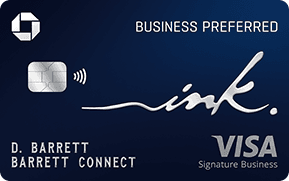
- Chase Ink Business Preferred: Does NOT report to personal credit
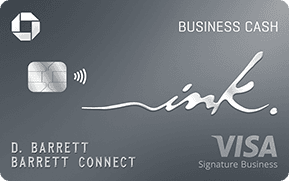
- Chase Ink Business Cash: Does NOT report to personal credit
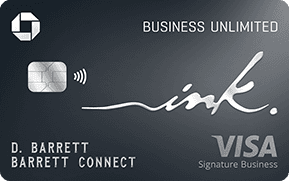
- Chase Ink Business Unlimited: Does NOT report to personal credit
- Chase Ink Business Premier: Does NOT report to personal credit
- Chase United Business Cards: Generally don't report to personal
- Chase Marriott Business: Does not report
- Chase IHG Business: Does not report
Chase is the strongest workaround issuer — none of their major business cards appear on your personal credit report (except for the application's hard inquiry).
American Express
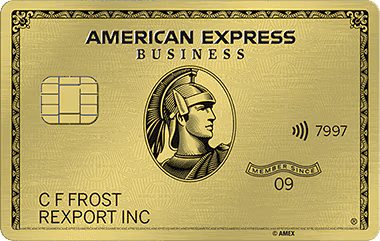
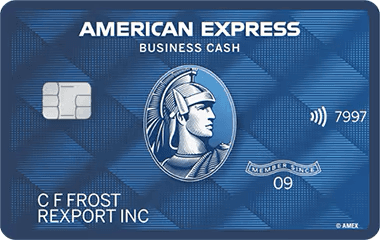
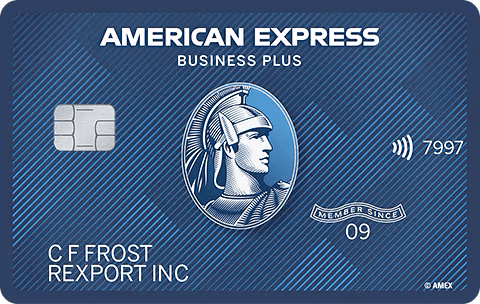
- All Amex business cards (Business Gold, Business Platinum, Business Green, Business Blue Cash, Business Plus): Do NOT report to personal credit
- Delta SkyMiles Business, Hilton Business, Marriott Bonvoy Business: Do NOT report
- Lowe's Business Rewards (formerly Lowe's Business): Does not report
Amex has the broadest set of non-reporting business products in the market.
Citi
- Citi cobranded business cards (American AAdvantage Business): Do NOT report to personal credit
- Citi business standalone cards are limited; the few that exist generally don't report
U.S. Bank
- U.S. Bank Business Triple Cash Rewards: Does NOT report
- U.S. Bank Business Altitude Power: Does NOT report
Wells Fargo
- Wells Fargo business cards generally do NOT report to personal credit
Bank of America
- BofA Business Advantage cards: Do NOT report to personal credit
- This is one of BofA's nicer features, since their personal-card 2/3/4 rule is so tight
Issuers That DO Report Business Cards to Personal Credit
- Capital One (almost all business cards): REPORT to personal credit
- TD Bank: Reports
- Discover Business: Reports
Capital One is the major outlier — their business cards (Spark Cash Plus, Spark Miles, Venture Business) appear on your personal credit report, complete with balances and utilization. This is one of the reasons Capital One's underwriting feels so much more constrained: their products eat your 5/24 slot AND your utilization headroom.
Why This Works as a 5/24 Workaround
Chase's 5/24 rule looks at your personal credit report and counts how many new accounts you've opened in the last 24 months. The rule's logic:
- Look at the personal credit report
- Count account opening dates within 24 months
- If 5 or more, decline new Chase personal applications
Because Chase Ink business cards don't appear on your personal credit report, they're invisible to the 5/24 check. You can:
- Be at 4/24 personal cards
- Open Chase Ink Business Cash → still at 4/24 (business card invisible)
- Open Chase Ink Business Preferred → still at 4/24
- Open Chase Ink Business Unlimited → still at 4/24
- Apply for a new Chase personal card → still under 5/24, still eligible
This is real, well-documented, and used heavily by anyone optimizing welcome bonuses. Three Chase Ink applications can land $3K+ in welcome bonus value while staying eligible for personal cards.
Two important caveats:
Caveat 1: 5/24 still applies to the business card application itself
Chase requires you to be under 5/24 on personal credit when applying for any Chase card, including business cards. The business card you open doesn't add to your 5/24 going forward — but you have to start under 5/24 to open it.
Caveat 2: Hard inquiries still hit personal credit
Each business card application generates a hard inquiry on your personal credit report. The tradeline doesn't show, but the inquiry does. Multiple inquiries in a short window will affect your personal score and your other-issuer approval odds.
Qualifying as a "Business"
This is the part most personal users don't realize: the bar to qualify as a business for credit card purposes is extraordinarily low.
You don't need:
- An LLC or corporation
- A registered DBA
- A business bank account
- Employees
- A website
- Significant revenue
You DO need:
- A legitimate income-generating activity
- The intent to continue doing it for profit
- The ability to honestly disclose your business income
Examples of activities that qualify as a "business" for credit card application purposes:
- Reselling on eBay, Mercari, Poshmark, or Amazon — if you've sold $500+ worth of items in a year, you're a business
- Freelance writing, design, programming, photography — any 1099 income at all
- Driving for Uber, Lyft, DoorDash, or Instacart — gig economy
- Tutoring, music lessons, fitness coaching, language instruction — even a few students per month
- Renting a property on Airbnb or VRBO
- Selling crafts, art, or homemade goods at any volume
- Running a YouTube channel, podcast, blog with any monetization
- Walking dogs, pet sitting, babysitting — gig or word-of-mouth
- Buying and selling collectibles (cards, sneakers, vintage items)
When you fill out the business application, you'll need:
- Business name: Most issuers accept your full legal name with " (Sole Prop)" or just your name
- Business type: Sole Proprietorship is the default
- Tax ID: Use your Social Security Number — sole proprietors don't need an EIN, though you can get a free one in 5 minutes at irs.gov if you want a separation between business and personal
- Years in business: Be honest — if you started selling on eBay 6 months ago, that's 0 years
- Annual revenue: Be conservative and honest — issuers often don't verify, but the application should be answerable under verification
Lying about having a business is fraud. But the bar for a real business is genuinely low. Most people doing any side income at all qualify legitimately.
Income Reporting for Business Card Applications
On a business card application, you typically report:
- Personal income (your full personal income — same number you'd put on a personal card)
- Business revenue (gross sales from the business)
- Business expenses or net income (varies by issuer)
The personal income drives most of the underwriting decision. Business revenue is treated as supplemental signal. A side hustle making $2,000/year with $90K personal income still qualifies for most business cards.
What Happens When You Carry a Balance
Because business card balances don't show on personal credit (at the issuers above), you can carry larger business balances without affecting your personal credit score's utilization calculation.
This is sometimes used strategically:
- Run a 0% APR business card balance during a cash-flow gap without dragging personal utilization
- Use Chase Ink Business Cash 0% intro APR for ~12 months as a personal financing bridge
Caution: this strategy only works on issuers that don't report to personal credit. Doing the same on a Capital One business card would hit your personal utilization just like a personal card would.
Also: business card terms aren't always identical to personal cards. Many business cards have slightly higher APRs, different late-fee structures, and fewer consumer protections (the CARD Act of 2009 doesn't fully cover business cards). Read terms before relying on a business card for personal financing.
Application Order: How to Stack Business Cards Strategically
A common 12-month sequence, starting from 4/24 personal:
- Month 0: Chase Ink Business Cash. Welcome bonus around $750. 5/24 unaffected.
- Month 4: Chase Ink Business Unlimited. Welcome bonus around $750. 5/24 unaffected.
- Month 8: Chase Ink Business Preferred. Welcome bonus around $1,200 (100K UR points). 5/24 unaffected.
- Month 12: Personal Chase card if desired (Sapphire Preferred, Freedom Flex). Now at 5/24, but eligible because you were 4/24 personal at application time.
Total welcome bonus value over 12 months: ~$2,700. All while remaining 5/24-compliant for personal Chase cards.
Constraints:
- Chase has its own velocity caps on Ink applications — typically one Ink card per 90 days
- Each application is a hard inquiry on personal credit, so the 5/24 inquiry damage still applies
- Welcome bonus eligibility on Chase Ink cards is restricted (24 months between same-card bonuses, generally)
Other Issuer-Specific Strategies
Amex business stack
Personal Amex cards each have once-per-lifetime bonus restrictions. The business versions are separate lineages, so you can collect:
- Personal Gold + Business Gold (both bonuses available)
- Personal Platinum + Business Platinum (both bonuses)
- Blue Business Cash + Blue Business Plus (no annual fees, both available)
Amex business cards don't report to personal credit, so utilization on your business card doesn't hit your score.
BofA business cards bypass 2/3/4
Bank of America's 2/3/4 rule applies to personal cards. BofA business cards are exempt — you can have multiple BofA business cards on top of your four-personal-card cap.
Stack across issuers
A typical 24-month roadmap for someone at 0/24 starting out:
- 3 Chase Ink cards (~$2,700 in bonuses)
- 2 Amex business cards (~$1,500 in bonuses)
- 1 BofA business card (~$500 in bonuses)
- Total: ~$4,700 in welcome bonuses with zero impact on personal 5/24
This is the kind of math that makes business cards the highest-leverage product in personal credit optimization.
FAQ
Do I need an LLC to apply for business credit cards?
No. Sole proprietorships are accepted by every major business card issuer. Use your SSN as the tax ID.
Will the issuer verify my business?
Rarely. Issuers occasionally request documentation (Schedule C, business bank statements) for very high-limit business cards or when the applicant claims very large business revenue. For most applications, the disclosure is taken at face value at application time.
Are business card welcome bonuses taxable?
Generally yes, when the card is held in the business's name. For sole proprietors, the welcome bonus is treated as business income, taxable on your Schedule C. Personal-card welcome bonuses are usually treated as rebates and not taxable.
Will my business card help build business credit?
Sometimes. Business cards reported to commercial credit bureaus (D&B, Experian Business) build a business credit profile that can help you qualify for business loans, lines of credit, or higher-tier business products. The strength of business credit reporting varies by issuer.
Does opening a business card affect my Chase 5/24 status?
No, on issuers that don't report business cards to personal credit (Chase, Amex, Citi, BofA, US Bank). The hard inquiry is on personal credit, but the tradeline isn't, so 5/24 doesn't count it.
Can I deduct the annual fee on my business card?
Yes, if the card is genuinely used for business expenses. Annual fees on business credit cards are deductible business expenses on Schedule C.
What happens if I close a business card?
Same mechanics as a personal card closure, but the tradeline drop only affects business credit (not personal). Close after the welcome bonus posts and the 12-month "bonus chasing" risk window has passed.
Can my business card be linked to my personal card's loyalty program?
Yes, often. Chase Ink cards earn into your same Ultimate Rewards account. Amex business cards earn into your same Membership Rewards account. This lets you pool rewards across personal and business cards efficiently.
Is using a personal card for business expenses safer than getting a business card?
Tax-wise, no — keeping personal and business expenses separate is cleaner for tax filing. Strategically, using a business card preserves personal credit headroom (no impact on personal utilization, no 5/24 count) so business cards generally win.
What if I'm not actually running a business?
Then don't apply for a business card. Lying on a credit application is fraud, and even a small genuine income-generating activity (eBay sales, gig driving) qualifies — so for most people the answer is "you probably do have a business."
The Bottom Line
Business credit cards that don't report to personal credit are the most underused tool in credit optimization. Three rules:
- Use Chase, Amex, Citi, BofA, US Bank, and Wells Fargo for non-reporting business cards. Avoid Capital One business cards if your goal is to keep them off your personal credit.
- Qualify legitimately. Sole proprietorships are accepted everywhere; even small side-income activities qualify. But don't fabricate.
- Stack carefully. Each application is a hard inquiry on personal credit, so velocity still matters even when the tradeline doesn't show.
Done right, business cards can add several thousand dollars in welcome bonuses per year while keeping your personal credit profile clean for the next big application.