Your annual fee just posted on a card you no longer use enough to justify. The obvious move is to close it. The obvious move is usually wrong.
A product change converts your existing account into a different card from the same issuer. Same account number in many cases, same open date, same credit limit, no hard inquiry, no new account on your credit report. You stop paying the fee and keep everything the account was doing for your credit profile.
It is the most underused move in consumer credit, and the rules that govern it are not published anywhere by the issuers themselves.
Why It Beats Closing
Closing a card costs you three things:
- The credit limit, which disappears from your total available credit and raises your utilization on everything else
- The account's contribution to average age of accounts, eventually. A closed account in good standing stays on your report for about 10 years, so the loss is delayed rather than immediate, but it does arrive.
- The relationship, including any pathway back to that product later
A product change costs you none of those. The account continues, aged and open, at a different annual fee.
See how to close a credit card without tanking your score for the cases where closing genuinely is correct.
The Universal Rules
Three things are true at essentially every issuer:
- No hard inquiry. Product changes do not generate a credit pull. This is the core benefit.
- No new account. Your report shows the same account, so it does not add to Chase 5/24 or any velocity count.
- No welcome bonus. You cannot product change into a card and receive its signup bonus. If the bonus is what you want, you have to apply.
That third point is the main tradeoff, and it is why product changes are a defensive move rather than an acquisitive one.
Rules by Issuer
| Issuer | Wait after opening | Change scope |
|---|---|---|
| Chase | 12 months | Within the same points family |
| Citi | 12 months | Broad, most current products |
| American Express | 12 months typical | Within credit or charge, family dependent |
| Capital One | 12 months | Narrow, limited paths |
| Bank of America | 12 months | Reasonably broad |
| Wells Fargo | 12 months | Within their lineup |
| Barclays | 12 months | Very narrow, co-brand bound |
| U.S. Bank | 12 months | Moderate |
Chase
Chase is the most structured. Changes stay inside a points family:
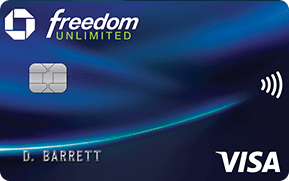
- Sapphire Reserve to Sapphire Preferred to Freedom Unlimited or Freedom Flex. All Ultimate Rewards products, all interchangeable.
- Ink Business Preferred to Ink Business Cash or Ink Business Unlimited. Same on the business side.
- Airline and hotel co-brands can generally only move within their own brand, if at all.
You cannot cross from a United card to a Sapphire card. The families are walls.
The classic Chase move is downgrading a Sapphire Preferred to a Freedom Unlimited after the bonus year. You keep the account and its age, you stop paying the annual fee, and you free up Sapphire bonus eligibility for later. Note that Chase's Sapphire bonus rules treat the family as one product, so holding any Sapphire card blocks a new Sapphire bonus.
Citi
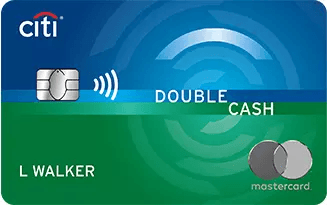
The most permissive of the major issuers. Citi will generally let you change into most currently available products, including across what other issuers would consider family lines. An AAdvantage card into a Double Cash is a standard Citi move.
Citi's 48-month bonus rule attaches to the product, so product changing into a card can affect your later bonus eligibility on it depending on the offer's terms language. Check before changing into a card you eventually want the bonus on.
American Express
Amex distinguishes upgrades from downgrades, and treats them differently:
- Upgrades (Green to Gold, Gold to Platinum) sometimes carry a targeted upgrade offer worth points. Check your account for these before upgrading, because they are real and frequently overlooked.
- Downgrades (Platinum to Green, Gold to a no-fee Blue product) are straightforward and usually processed on a single phone call or in chat.
- Movement between credit cards and charge cards is limited but possible, and it has a useful side effect: it can free a slot against Amex's 5-credit-card limit.
Amex also applies its once-per-lifetime rule to the card you change into. Product changing into a Gold card generally does not consume Gold bonus eligibility, but it also does not grant it, and pop-up behavior afterward is inconsistent.
Capital One
The most restrictive of the major issuers. Product change paths are narrow, and the answer is often that no change is available for your account. Venture to VentureOne is the standard workable path. Many Capital One cardholders find their only options are closing or keeping.
Barclays
Narrow, for structural reasons. Barclays' lineup is almost entirely co-brands, so there is rarely anywhere to go. A JetBlue Plus can typically become a JetBlue Card. It cannot become a Wyndham card.
When to Product Change
Good reasons:- The annual fee no longer clears the value you get. Run the numbers first with annual fee math.
- You want to keep an old account for age and limit but stop paying for it
- You want to reset bonus eligibility on a premium card by getting the current one off your account
- A no-fee card in the same family earns better on your actual spending
- You want the new card's welcome bonus. You will not get it.
- You want a card in a different family. Most issuers will not allow it.
- You are trying to escape a fee you can get waived. Try a retention offer first.
The Order of Operations
When an annual fee posts on a card you are reconsidering, work through this sequence:
- Wait for the fee to post. Most issuers refund it in full if you act within 30 days of posting, and some allow up to 60. Acting before it posts forfeits the leverage.
- Call and ask for a retention offer. Frequently a statement credit or bonus points that make keeping the card worthwhile for another year. This is free to ask and often the best outcome.
- If retention is declined, ask about product change options. The same call, the same agent.
- Only close if there is no product change path, which mainly happens at Capital One and Barclays.
Most people skip straight from step 1 to step 4 and give up an account for no reason.
Timing Details That Matter
- The 12-month wait is close to universal and is measured from account opening.
- Changing before the annual fee posts avoids paying it, but forfeits the retention offer conversation. If the card has real value, the retention offer is usually worth more than the timing convenience.
- After a change, wait before changing again. Most issuers want another 12 months.
- Points usually transfer with you inside the same currency family. Ultimate Rewards on a Sapphire Preferred survive a change to a Freedom card. Points on a co-brand generally do not survive a change out of that brand, so transfer or spend them first.
That last one costs people real value. Before any product change, check what happens to your existing points balance. If you are downgrading from a card that earns transferable points to one that does not, move the points out first.
What Happens to Benefits
A product change takes effect on the new card's terms immediately or at the next statement, depending on the issuer. Things to expect:
- Ongoing credits stop. If you had used $150 of a $300 annual credit, you lose access to the remainder.
- Travel protections change to whatever the new card carries, which is usually less.
- Authorized users carry over in most cases.
- A new card number is sometimes issued and sometimes not, varying by issuer and by product. If it changes, update your recurring charges.
FAQ
Does a product change hurt my credit score?
No. There is no hard inquiry and no new account. The credit limit and open date carry over, so the effect is neutral.
Will I get the new card's welcome bonus?
No. Product changes never earn welcome bonuses. If the bonus is the goal, apply for the card instead.
Does a product change count toward 5/24?
No. It is not a new account.
How long do I have to wait after opening?
12 months at essentially every major issuer, measured from account opening.
Can I product change to a card from a different issuer?
No. Product changes only happen within one issuer's lineup.
Do my points transfer?
Within the same currency family, yes. Ultimate Rewards survive a Sapphire to Freedom change. Co-brand miles generally do not survive a change out of that brand. Move points out first if you are unsure.
Should I product change or ask for a retention offer?
Ask for retention first. It is free, it is often generous, and you can still product change on the same call if it is declined.
Can I change back later?
Usually, after another 12 months. Do not count on being able to return to a product that has been discontinued in the meantime.
Will I keep my credit limit?
Yes, in almost all cases. Occasionally an issuer will adjust a limit when moving to a card with different underwriting, but the default is that it carries over.
Does product changing affect welcome bonus eligibility on that card later?
It can. Citi's 48-month language and Amex's once-per-lifetime rule both attach to the product, and how a product change interacts with them varies by offer. Check the terms of any offer you are eventually hoping to claim.
The Bottom Line
Closing a card is a permanent decision made to solve a temporary problem, which is that the annual fee stopped being worth it.
- Let the fee post, then call. Retention offer first, product change second, closing only as a last resort.
- No hard pull, no new account, no lost history. That combination makes a product change strictly better than closing whenever a path exists.
- Move your points out first if you are leaving a currency behind. This is the one irreversible mistake in an otherwise reversible process.
Every issuer except Capital One and Barclays has usable downgrade paths. Most people never ask about them.