You are buying a $2,400 mattress. The store offers 12 months special financing, no interest if paid in full. That sounds like a 0% APR promotion, and every reasonable person reads it that way.
It is not. It is deferred interest, and the difference costs money in a way that is designed to be invisible at the point of sale.
The Mechanical Difference
0% APR means no interest accrues during the promotional period. If a balance remains at the end, interest starts accruing from that point forward on whatever is left. Deferred interest means interest accrues from day one, but the charges are held back. If you pay the balance to zero before the promotion ends, the accrued interest is waived. If any balance remains, even one dollar, every dollar of accrued interest from the original purchase date is added to your account at once.The phrase to look for is "no interest if paid in full." That construction means deferred interest. A true 0% offer says "0% intro APR" and names a period.
What It Actually Costs
Take the $2,400 mattress on a 12-month deferred interest plan at a 29.99% APR.
You budget $200 a month. Life happens in month 10 and you pay $50 instead of $200. At month 12, you have paid $2,250 and have $150 left.
| Deferred interest | True 0% APR | |
|---|---|---|
| Balance at month 12 | $150 | $150 |
| Interest charged | About $390 | $0 |
| New balance | About $540 | $150 |
You missed the deadline by $150 and it cost you roughly $390. The retroactive charge is calculated on the full original balance across the entire promotional period, not on the $150 you still owe.
That asymmetry is the entire product. Get it exactly right and it is free. Miss by any margin and you pay as though the promotion never existed.
Where You Will Encounter It
Deferred interest is standard on retail credit cards, which are almost all issued by Synchrony or Comenity. Common venues:
- Furniture and mattress retailers
- Appliance and electronics stores
- Jewelry stores
- Home improvement retailers
- Medical and dental financing, especially Care Credit
- Tire and auto service chains
It also appears on some retailers' installment plans and on financing offered at checkout by third parties.
The Payment Allocation Problem
Here is the trap within the trap, and the part that catches careful people.
If your store card has both a promotional balance and a regular purchase balance, federal rules require issuers to apply payments above the minimum to the highest-APR balance first. That sounds protective, and usually it is.
With deferred interest, it works against you. The promotional balance is nominally at 0%, so it is the lowest-rate balance, so your extra payments go to the regular purchases instead. You can be paying aggressively every month and still arrive at the deadline with a promotional balance outstanding.
There is a partial protection: in the final two billing cycles of a deferred interest promotion, issuers are required to direct excess payments to the promotional balance. That helps, but two cycles is not much runway on a $2,000 balance.
The practical rule: never mix regular purchases onto a card carrying a deferred interest balance. Use the card for the financed purchase and nothing else until it is cleared.How to Use It Safely
Deferred interest is not automatically a bad deal. Used precisely, it is genuinely free financing. The requirements are strict:
- Divide the balance by one less than the promotional term. A 12-month promotion means dividing by 11, so you finish a full month early. That buffer month is the whole safety margin.
- Set up autopay for that fixed amount, not for the minimum payment. The minimum payment on these cards is deliberately calibrated to leave a balance at the end.
- Make no other purchases on that card. See the allocation problem above.
- Write down the exact promotion end date. It is on your statement. It is often not 12 months from purchase, but 12 months from the account opening or the first statement.
- Check the balance at month 10. If you are behind, you still have time to correct.
Do all five and it costs nothing. Skip any one and you are exposed.
The Minimum Payment Is Not Enough
Worth stating separately because it is the most common failure mode. The minimum payment on a deferred interest plan is frequently calculated so that following it exactly leaves a balance when the promotion expires.
If you set up autopay for the minimum and assume you are fine, you will very likely trigger the retroactive interest. The minimum payment and the payoff payment are different numbers, and only one of them protects you.
Better Alternatives
If you need to finance a purchase, there are cleaner instruments:
A true 0% intro APR card
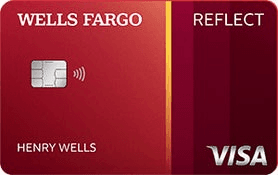
Real 0% promotional periods run 12 to 21 months on purchases, and if a balance remains at the end you simply start paying interest going forward. No retroactive charge. Cards like Wells Fargo Reflect and Citi Diamond Preferred exist for exactly this.
The catch is that you need decent credit to be approved, and you need to apply before the purchase. See balance transfer cards explained for the related mechanics.
A personal loan
Fixed rate, fixed term, no cliff. Often a lower effective cost than the risk-adjusted cost of deferred interest.
Paying cash
If the reason you are financing is that you cannot afford the purchase, deferred interest is the worst available way to bridge that gap, because the failure mode is a 30% retroactive charge at precisely the moment your budget was already tight.
If You Already Missed the Deadline
Not entirely hopeless:
- Call and ask for a courtesy waiver. Both Synchrony and Comenity will sometimes reverse the retroactive interest, particularly for a first occurrence and a small shortfall. Pay the remaining balance to zero first, then call. This works more often than people expect.
- Escalate once if declined. A supervisor has more authority than a first-line agent.
- If it stands, pay it down fast. The balance is now at the card's regular APR, which is typically near 30%.
FAQ
What is the difference between deferred interest and 0% APR?
0% APR accrues no interest during the promotion. Deferred interest accrues it the whole time and waives it only if you reach zero before the deadline. Miss by a dollar and all of it is charged.
How do I know which one I have?
Look at the language. "No interest if paid in full within X months" is deferred interest. "0% intro APR for X months" is a true promotion. The card agreement states it explicitly.
Does making the minimum payment protect me?
No. Minimum payments on these plans routinely leave a balance at the deadline. Divide the balance by the term yourself.
What happens if I am one dollar short?
You are charged all the interest that accrued on the original balance across the whole promotional period. The size of the shortfall does not matter.
Can I transfer the balance out before the deadline?
Yes, and this is a legitimate escape hatch. A balance transfer to a 0% card before the promotion expires clears the promotional balance and avoids the retroactive charge. Factor in the transfer fee.
Does the retroactive interest hurt my credit score?
Indirectly. The charge raises your balance, which raises your utilization, which lowers your score. Store cards have low limits, so the effect can be large.
Is deferred interest legal?
Yes. It is disclosed, and the disclosures are required. The problem is that the disclosure language reads like a 0% offer to almost everyone.
Why do stores use it instead of 0% APR?
Because a meaningful share of customers miss the deadline, and that revenue funds the promotion.
Does Care Credit use deferred interest?
Yes, on its standard promotional plans. Medical and dental financing is one of the most common places people encounter it, often at a stressful moment.
Should I ever use deferred interest financing?
If you can pay it off with a month to spare, have the cash available, and will not use the card for anything else, it is free money. If any of those three is uncertain, use a true 0% card instead.
The Bottom Line
Deferred interest is a product that is free if you are precise and expensive if you are approximately right. Most consumer financial products do not have a cliff like that.
- Learn the phrase. "No interest if paid in full" means deferred interest. "0% intro APR" does not.
- Divide by one less than the term and autopay that amount. The minimum payment is designed to leave you short.
- Never put other purchases on the card. Payment allocation rules will route your extra payments away from the balance you are trying to clear.
Used carefully it is genuinely useful financing. The risk is not the interest rate. It is that the penalty for a small mistake is the same as the penalty for a large one.