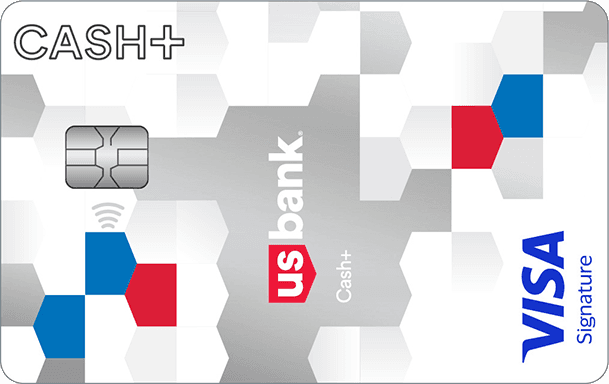
This is the first in our Card Explained series, where we take one card, put it under real-world use, and show exactly how the rewards land. We are starting with the U.S. Bank Cash+ Visa Signature, because it is one of the most flexible no-annual-fee 5% cards out there, and because it has a quirk that trips up almost everyone: the difference between a ride and a meal delivered by the same app.
The card in one paragraph
The U.S. Bank Cash+ has no annual fee and earns on a three-tier structure that you partly control:
- 5% cash back on two categories you choose each quarter, on up to $2,000 in combined purchases per quarter
- 2% cash back on one everyday category you choose (groceries, gas and EV charging, or restaurants), with no cap
- 1% cash back on everything else, and on your 5% spend after you pass the $2,000 quarterly cap
There is also a 5% rate on prepaid travel booked through the U.S. Bank Travel Rewards Center. The catch that comes with all this flexibility: you have to re-select your categories every quarter, and anything you forget to select earns just 1%.
The star of the show: Ground Transportation
One of the twelve categories you can pick for your 5% is Ground Transportation. This is the category that makes the Cash+ interesting for anyone who lives in a city and does not drive much.
Here is what actually codes as Ground Transportation, confirmed from real posted transactions:
| Merchant | What it is | Category it hit | Earn rate |
|---|---|---|---|
| Uber | Rideshare | Ground Transportation | 5% |
| Lyft | Rideshare | Ground Transportation | 5% |
| Citi Bike | Bike share | Ground Transportation | 5% |
| Uber Eats | Food delivery | Restaurants | 2% |
So a single quarter of city commuting on rideshare and bike share, with Ground Transportation selected as a 5% category, earns 5% across all of it. Rideshare, taxis, and bike-share docks like Citi Bike, Divvy, and Bluebikes all fall under the same transportation coding. That is a genuinely strong rate for spend that most cards treat as ordinary.
The gotcha: Uber Eats is not transportation
Here is the part almost nobody gets right. Uber Eats does not count as Ground Transportation, even though it is Uber.
The card does not reward based on the app you opened. It rewards based on the merchant category the charge carries. An Uber ride codes as transportation. An Uber Eats order codes as a restaurant or food-delivery merchant. Same brand, same app icon, two completely different buckets.
You can see it clearly in a real statement:
Uber $105.55 Earn rate 5% (Ground Transportation)Uber Eats $21.84 Earn rate 2% (Restaurants)Uber Eats $24.87 Earn rate 2% (Restaurants)
Notice the Uber Eats charges earned 2%, not 5%, and only because the cardholder also selected Restaurants as their 2% everyday category. Had they picked groceries or gas for the 2% slot instead, those Uber Eats orders would have dropped all the way to 1%.
The same logic applies to DoorDash, Grubhub, and other delivery services: they code as restaurants or food delivery, not as transportation. If you want your food delivery to earn more than 1%, the 2% Restaurants pick is where it belongs, not the 5% Ground Transportation pick.
How to actually pick your categories
The Cash+ rewards planning, not spending. Two decisions drive most of the value.
Your two 5% categories
You get to choose two from a list of twelve:
- Fast food
- Home utilities
- TV, internet, and streaming
- Department stores
- Cell phone providers
- Electronics stores
- Sporting goods
- Furniture stores
- Movie theaters
- Ground transportation
- Gyms and fitness centers
- Select clothing stores
The two that quietly stand out are Home utilities and Cell phone providers, because 5% on a power bill or a phone bill is rare and shows up every single month. Ground Transportation joins that tier if you are a heavy rideshare or bike-share user. In the real dashboard we looked at, the cardholder ran Cell Phone Providers and Ground Transportation as their two 5% picks and had already spent over $1,000 in transportation for the quarter.
Remember the shared cap: the $2,000 limit is combined across both 5% categories per quarter, not $2,000 each. Once you cross it, everything drops to 1% for the rest of the quarter.
Your one 2% category
You pick one of: groceries and grocery delivery, gas and EV charging, or restaurants. This one has no cap, so it is the home for a category you spend on constantly but heavily. If food delivery is a big part of your life, Restaurants here is what rescues those Uber Eats and DoorDash orders from the 1% pile.
A quick value example
Take the transportation spend from the real statement: roughly $530 toward the 5% cap in a quarter, mostly Uber, Lyft, and Citi Bike.
- At 5% (Ground Transportation selected): about $26 back on that spend
- At 1% (category not selected): about $5 back
That is a $21 swing on one quarter of rides, from one checkbox. Annualize a steady rideshare and bike-share habit across a full year and the Ground Transportation pick alone is often worth $200 to $400, before you even count the second 5% category and the 2% everyday pick.
Two things that will cost you if you forget
- Re-select every quarter. Selections lock for the current quarter, and there is a window (roughly mid-quarter to late in the quarter) to set the next one. Miss it, and unchosen spend earns 1%. Put a recurring calendar reminder near the start of each quarter.
- Watch the merchant category, not the brand. Uber Eats, warehouse clubs, and supercenters routinely code differently than people expect. When in doubt, run a small test charge and check the earn rate on the pending transaction before you route big spend to it.
The bottom line
The U.S. Bank Cash+ rewards people who are willing to manage it. Pick Ground Transportation and you get a rare 5% on Uber, Lyft, and Citi Bike. Pick Restaurants as your 2% and you at least catch Uber Eats and other delivery at 2%. Just do not expect the app's name to decide the rate: on this card, a ride and a burrito ordered from the same Uber account land in two different reward buckets, and knowing which is which is most of the game.
Want to see how the Cash+ stacks up against other flexible-category cards like the Citi Custom Cash? Compare them side by side and check current approval odds on their card pages.