You're applying for a Chase Sapphire Preferred. You've checked 5/24 — you're at 3 — and your credit score is solid. You hit submit, expecting an instant approval. Instead, the screen displays:
"Based on your relationship with us, we are unable to offer you this product at this time."
No application was submitted for hard-pull review. No formal decline. No reconsideration path. You've just hit Chase pop-up jail.
Pop-up jail is the credit-card community's name for a Chase pre-screening block — a soft signal Chase shows certain applicants before the application is fully processed. It doesn't appear on your credit report (no hard inquiry), doesn't formally count as a denial, and isn't always permanent. But while you're in pop-up jail, no Chase personal credit card application will go through, regardless of which card you apply for.
Here's what triggers it, how long the typical sentence runs, and what actually gets you out.
What Pop-Up Jail Actually Is
Pop-up jail is Chase's pre-application screen — a soft check that runs against your file before the formal hard pull. If the system identifies certain risk patterns, it short-circuits the application before it submits, displaying the "unable to offer" message.
Some critical mechanics:
- No hard inquiry. Pop-up jail blocks the hard pull from happening, so there's no inquiry on your report.
- Not a denial. Because the application never formally submitted, there's no adverse action notice and no decline on record.
- Not card-specific. If you're in pop-up jail and apply for the Sapphire Preferred, you'll see the same message if you turn around and apply for the Freedom Unlimited five minutes later. The block is profile-level, not product-level.
- It's not always permanent. Most applicants come out of pop-up jail eventually, though sentences range from a few months to multiple years.
What Triggers Pop-Up Jail
Chase has never publicly disclosed the triggers, but the data points across thousands of applicants are consistent. The most common triggers, in rough order of how likely each is to put you there:
1. Bonus chasing patterns
This is the most-cited trigger. If your account history with Chase shows a pattern of:
- Opening a card primarily to capture the welcome bonus
- Hitting the spend requirement quickly
- Downgrading or closing the card within 12 months
- Repeating the cycle
…Chase's risk system reads you as unprofitable and starts blocking new applications.
Specific patterns that flag risk:
- Closing a Sapphire Preferred or Sapphire Reserve within ~12 months of opening
- Downgrading a premium card before paying its annual fee twice
- Opening multiple Chase cards within short windows
- Using cards almost exclusively for category-bonus or signup-bonus spend
2. High new-credit velocity (especially across all issuers)
Even though Chase 5/24 is its own separate rule, applicants who are slightly under 5/24 but have a heavy new-credit pattern (3–4 new cards across all issuers in the last 6 months) sometimes get pop-up jailed even when 5/24-eligible.
3. Existing Chase cards underutilized
If you have multiple Chase cards open but barely use them, the system can read this as low-engagement and start blocking new applications. The fix is just using your existing Chase cards more.
4. Recent account closures (yours)
Closing a Chase card recently — especially a long-held card or one with a meaningful credit limit — can trigger pop-up jail on subsequent applications. The pattern looks like "downgrading" relationship strength to Chase's system.
5. Recent credit issues elsewhere
Late payments, charge-offs, or collections from any issuer in the last 12 months. Chase has higher standards here than most issuers — even one 30-day late from a year ago can put you in pop-up jail.
6. Manufactured spend patterns
Heavy use of gift card resellers, prepaid card loading, peer-to-peer payments tied to bonus spend — Chase has gotten very good at flagging manufactured-spend signatures. This can trigger pop-up jail and, in extreme cases, cause Chase to shut down all your accounts.
How Long Pop-Up Jail Lasts
Sentence lengths reported by the community vary significantly:
- Short jail (3–6 months): Mild trigger, like high inquiry velocity that's about to age out
- Medium jail (6–18 months): Moderate trigger, like a bonus-chasing pattern with one or two recent closures
- Long jail (18+ months): Heavy trigger, like multiple recent Chase closures, manufactured spend flags, or shutdown history
- Permanent (rare): Account-level shutdowns and the worst manufactured-spend cases
Most applicants come out of pop-up jail in 12–18 months if they change behavior. The sentence is reduced significantly by demonstrating the patterns Chase wants — actual organic spending on existing Chase cards, banking deposits, no further closures.
How to Tell If You're in Pop-Up Jail
The best test is the Pop-Up Jail Application approach — apply for a Chase card and observe the response.
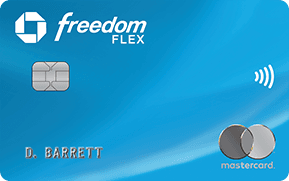
Before doing this, check that your file is otherwise eligible (under 5/24, decent score, no fresh negatives). Then apply for the lowest-stakes Chase card you'd realistically want — typically the Freedom Flex, Freedom Unlimited, or a Sapphire Preferred. If you see the "unable to offer" message before any hard-pull processing begins, you're in pop-up jail.
Important: this test does not generate a hard inquiry, so it's free to run. Apply once or twice every 3–6 months to test if the jail is still active.
What Actually Gets You Out
1. Time
The most reliable factor. Most pop-up jail sentences expire on their own as the trigger ages out of Chase's review window.
2. Use your existing Chase cards
If you have any open Chase cards, put real spend on them. Recurring bills, daily purchases, anything organic. Chase's risk model rewards engagement. A Chase Sapphire Preferred you put $500/month on for 6 months reads very differently from one that hasn't been swiped in 8 months.
3. Build the banking relationship
Open a Chase checking account if you don't have one. Use it as your primary checking — direct deposit, regular activity, $5K+ minimum balance ideally. Chase Private Client (CPC) tier (~$150K+ in assets) is reportedly correlated with faster pop-up jail releases.
4. Don't close anything
While you're in pop-up jail, do not close any Chase cards (even old ones with annual fees). Closing makes it worse. If you have an annual-fee card you don't want to keep, downgrade it to a no-fee version (Sapphire Preferred → Freedom Unlimited or Freedom Flex; CSR → Sapphire Preferred → no-fee Freedom).
5. Don't apply for non-Chase cards aggressively
New inquiries elsewhere, even if they don't directly affect Chase's models, contribute to overall velocity signals that pop-up jail factors in. Going quiet on credit applications across all issuers for 6–12 months helps.
6. Pay annual fees on existing premium Chase cards
An on-time annual fee payment on Sapphire Preferred or CSR is read as "I'm staying" — exactly the signal Chase wants. Skip the annual fee and either downgrade or close, and you're confirming the "bonus chaser" signal.
7. Don't try to "earn your way out" through manufactured spend
Heavy spending is good. Heavy spending that looks like manufactured spend (round-number swipes, gift card stores, CardCash, payment routing) is bad and can extend the sentence. Real, organic, varied spend works.
What Doesn't Work
Reconsideration calls
Because pop-up jail isn't a formal denial, reconsideration analysts can't override it. The pre-application screen blocks the file before it reaches an underwriter. Calling and asking for a manual review almost never works for pop-up jail specifically.
Closing other issuers' cards
Pop-up jail is about your relationship with Chase. Closing Citi or Capital One cards doesn't help.
Applying for Chase business cards
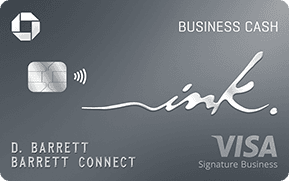
Chase business cards are evaluated separately, but if your personal profile is in pop-up jail, the business card system often shows the same "unable to offer" message. Worth testing once if you have legitimate business activity, but don't expect it to bypass the block reliably.
Switching to a Chase co-brand (United, Marriott, IHG, Aer Lingus)
Most Chase co-brand applications run through the same pre-screen as direct Chase products. Pop-up jail typically blocks them too.
Multiple applications back-to-back
Submitting 4 applications in 24 hours hoping one slips through doesn't work. The pre-screen runs on every attempt and will block them all.
What If You're Trapped Forever?
A small subset of applicants — typically those flagged for severe manufactured spend or those Chase has previously shut down — appear to be in permanent pop-up jail. The signal is multi-year inability to apply successfully despite clean files and good behavior.
In these cases:
- Confirm shutdown status. Log into chase.com and check your account list. If you've been formally shut down (FR, financial review, account closure), no application strategy will get you back in.
- Don't apply repeatedly. This actually entrenches the block.
- Consider the relationship as ended. Many applicants in this position eventually move on to other issuers entirely. Amex, Capital One, Citi, BofA, and Wells Fargo all offer competitive products without Chase's specific risk-management profile.
Most pop-up jails are not permanent. Confirm before assuming the worst.
How to Avoid Pop-Up Jail Going Forward
Once you're out (or if you've never been in), the rules to stay out:
- Hold Chase cards for 24+ months minimum. Closing or downgrading within 12 months of opening is the single biggest trigger.
- Pay all annual fees at least once. Skip the AF and downgrade right after the bonus is the most flagged behavior.
- Use Chase cards organically. Don't keep a CSR open just for travel-bonus spend. Use it for groceries, gas, regular life — even if the rewards aren't optimal.
- Build a Chase banking relationship. Even a basic checking account with regular activity helps.
- Stay 5/24-compliant. Even when you can stretch with non-Chase cards, going to 6/24 or higher signals the kind of velocity that triggers pop-up jail later.
FAQ
Does pop-up jail show on my credit report?
No. The hard inquiry never happens, so there's no record on your credit report. Other lenders won't see it.
Will pop-up jail expire automatically?
Usually yes — most sentences are 6–18 months and expire as the underlying triggers age out. A small subset (severe cases) can be functionally permanent.
Can I check pop-up jail status without applying?
Not directly. The cleanest test is to apply for a low-stakes Chase card and observe whether the pre-screen blocks you. Since pop-up jail blocks the hard pull, this test is free.
Does pop-up jail affect my Chase Ultimate Rewards account?
No. Existing accounts and points balances are unaffected. Pop-up jail only blocks new applications.
What if I have a Chase business card and I'm in personal pop-up jail?
The systems are separate at underwriting time, but pop-up jail can extend across both. Apply for a business card once to test; if blocked, focus on the strategies above.
Does pop-up jail apply to authorized user adds?
Sometimes. AU adds can be blocked by some of the same risk patterns, but the rule is less strict than for primary applications. AU adds for family members typically still go through.
How is pop-up jail different from being declined?
A decline happens after the hard pull — Chase reviewed your file and said no. Pop-up jail happens before the hard pull — Chase's pre-screen blocked the application from formally submitting. Pop-up jail leaves no record on your credit report; a decline does (the inquiry, plus the decline shows up if anyone asks Chase for verification).
Will Chase tell me why I'm in pop-up jail?
No. Customer service reps don't have access to the pre-screen logic and generally can't explain or override it. The triggers are inferred from data points across applicants, not disclosed by Chase.
What if I'm at 5/24 and I see the pop-up message — is it 5/24 or pop-up jail?
The 5/24 decline at the actual application stage is a different message and produces a hard inquiry. The pop-up "unable to offer" message before submission, with no hard inquiry, is pop-up jail. If you can't tell, check your credit reports a few days later — if there's no new Chase inquiry, you saw pop-up jail, not a 5/24 decline.
The Bottom Line
Pop-up jail is Chase's pre-screen telling you that, based on your current relationship with them, they don't want to extend new credit yet. Three things to remember:
- It's not a denial. No hard pull, no formal decline, no record on your credit report.
- Time and engagement get you out. Use existing Chase cards organically, hold cards for 24+ months, build a banking relationship, don't close things.
- Don't apply repeatedly. Each attempt is a free test, but stacking them doesn't help — and it can extend the sentence.
If you want a single thing to optimize for: make Chase profitable on the cards you already have. Real spend on real life expenses, paid in full, every month. Chase rewards relationships. Pop-up jail is what happens when their model decides you're not building one.